The role of ports and logistics in Ukraine’s reconstruction
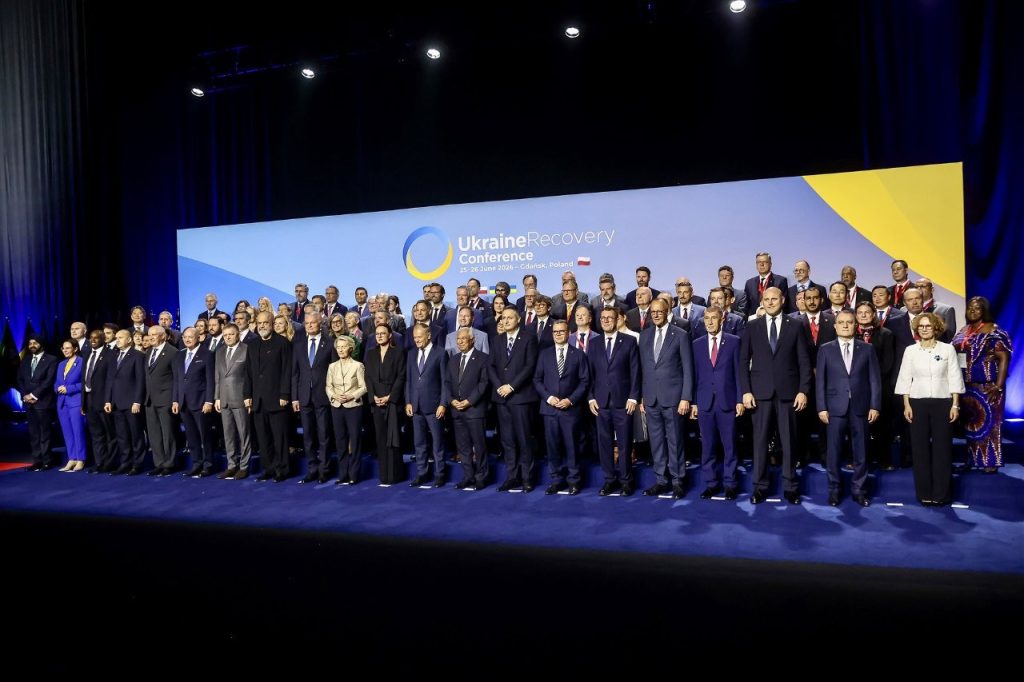
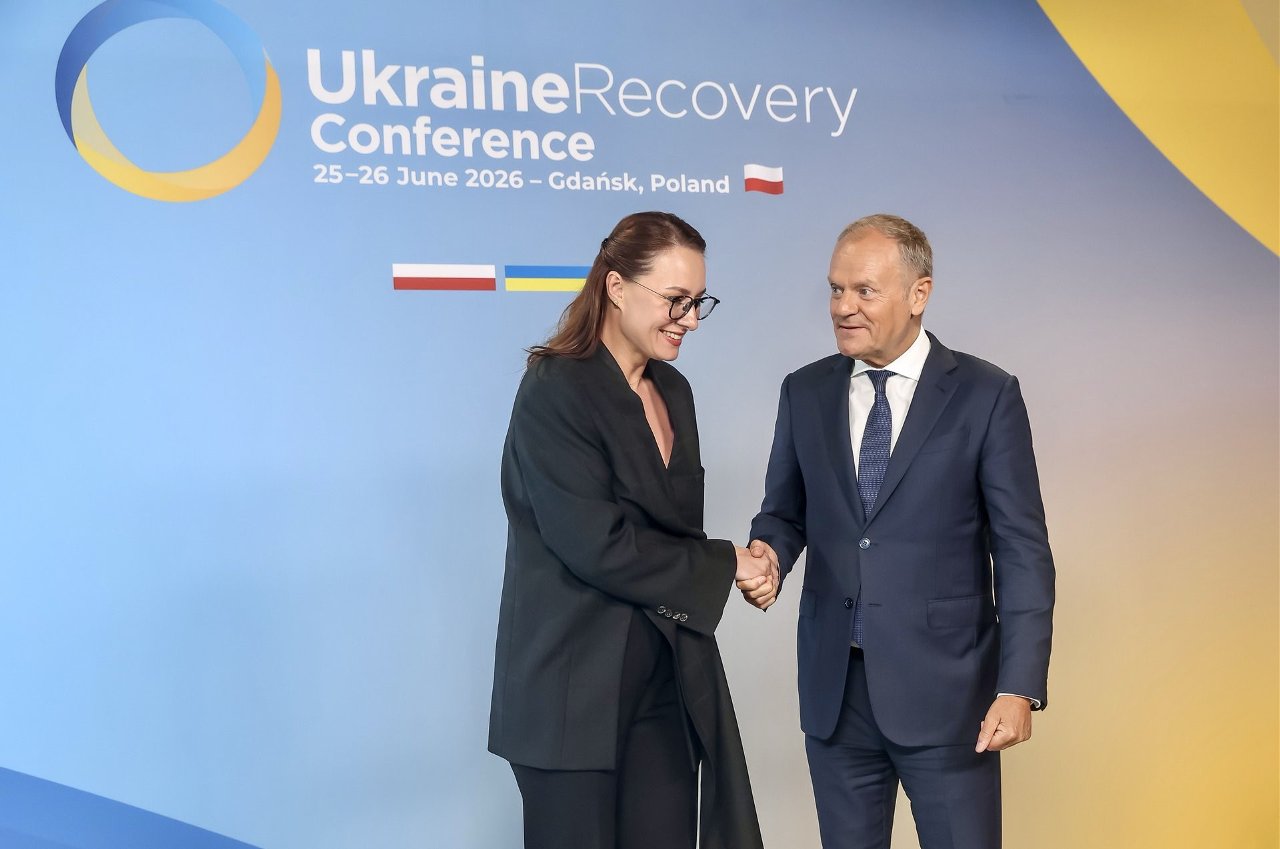
On 25–26 June, Gdańsk hosted the Ukraine Reconstruction Conference (URC 2026), one of the most important international events dedicated to the future of a country impacted by Russian aggression. The event was attended by over 70 state delegations and thousands of representatives from the business sector, financial institutions, and both international and non-governmental organisations. This year’s meeting, the fifth edition of the conference following previous events in Rome, Berlin, London and Lugano, sought to motivate and coordinate efforts helping the reconstruction of Ukraine.
Prime Minister Donald Tusk opened the conference, emphasising the symbolic significance of Gdańsk as a place that experienced almost total destruction and subsequent rebirth. In his speech, he pointed out that the reconstruction of Ukraine is not only a matter of infrastructure, but also of social, economic and spiritual reconstruction. Gdańsk is an example of successful reconstruction and solidarity, and serves as an inspiration for future efforts to support Ukraine.
‘I have invited you here because this place clearly shows that the miracle of reconstruction happens when people truly want it. Gdańsk was rebuilt from the rubble; it became a complete reconstruction – not just in terms of architecture, as the spirit of the city was also restored. And this great effort also awaits Ukraine. We all believe that Ukraine can resist Russian aggression. However, reconstruction is not just about buildings, schools and infrastructure. It is also about what is inside us’, said Prime Minister Donald Tusk.
Logistics and transport as the foundation for reconstruction
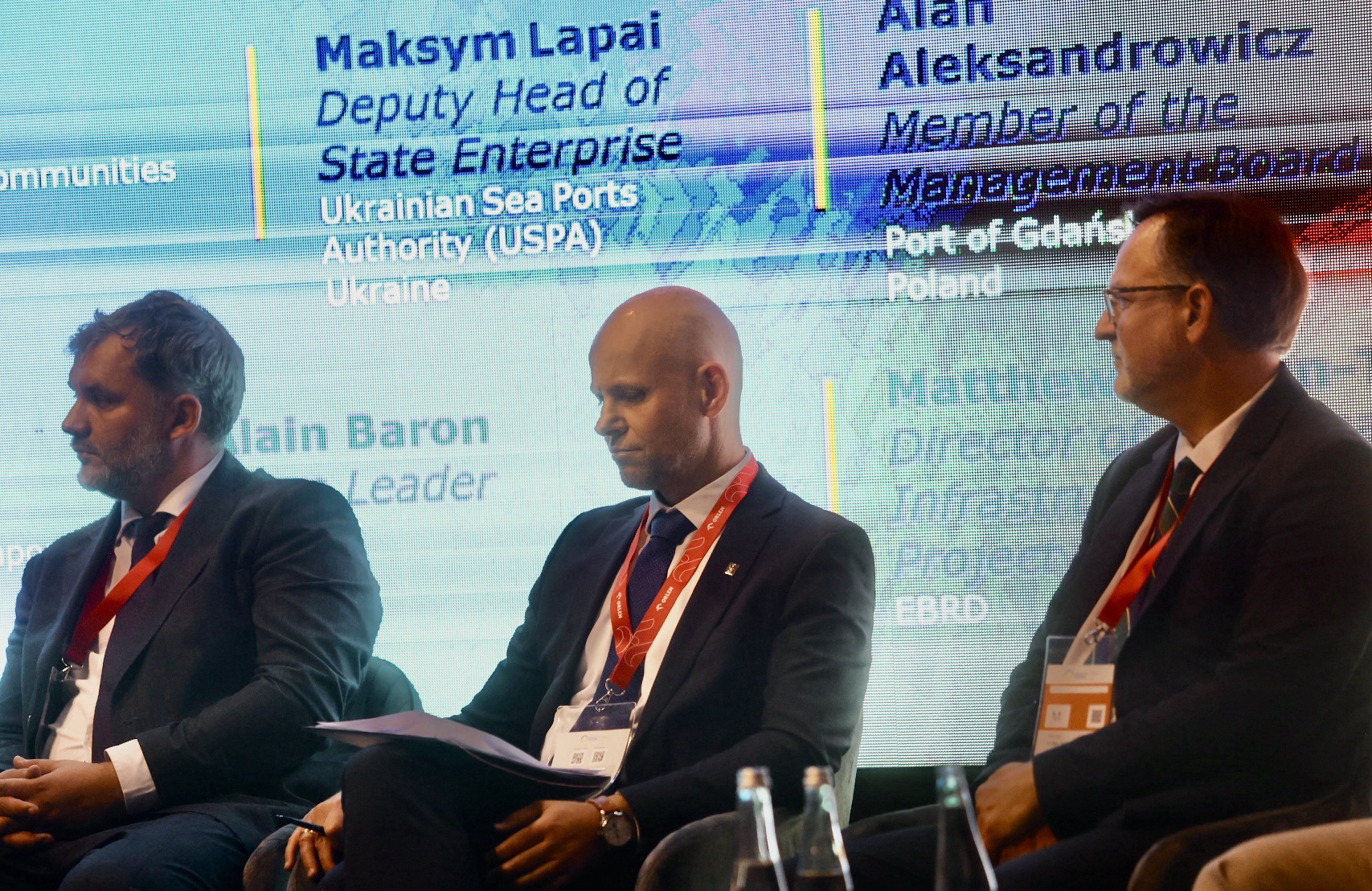
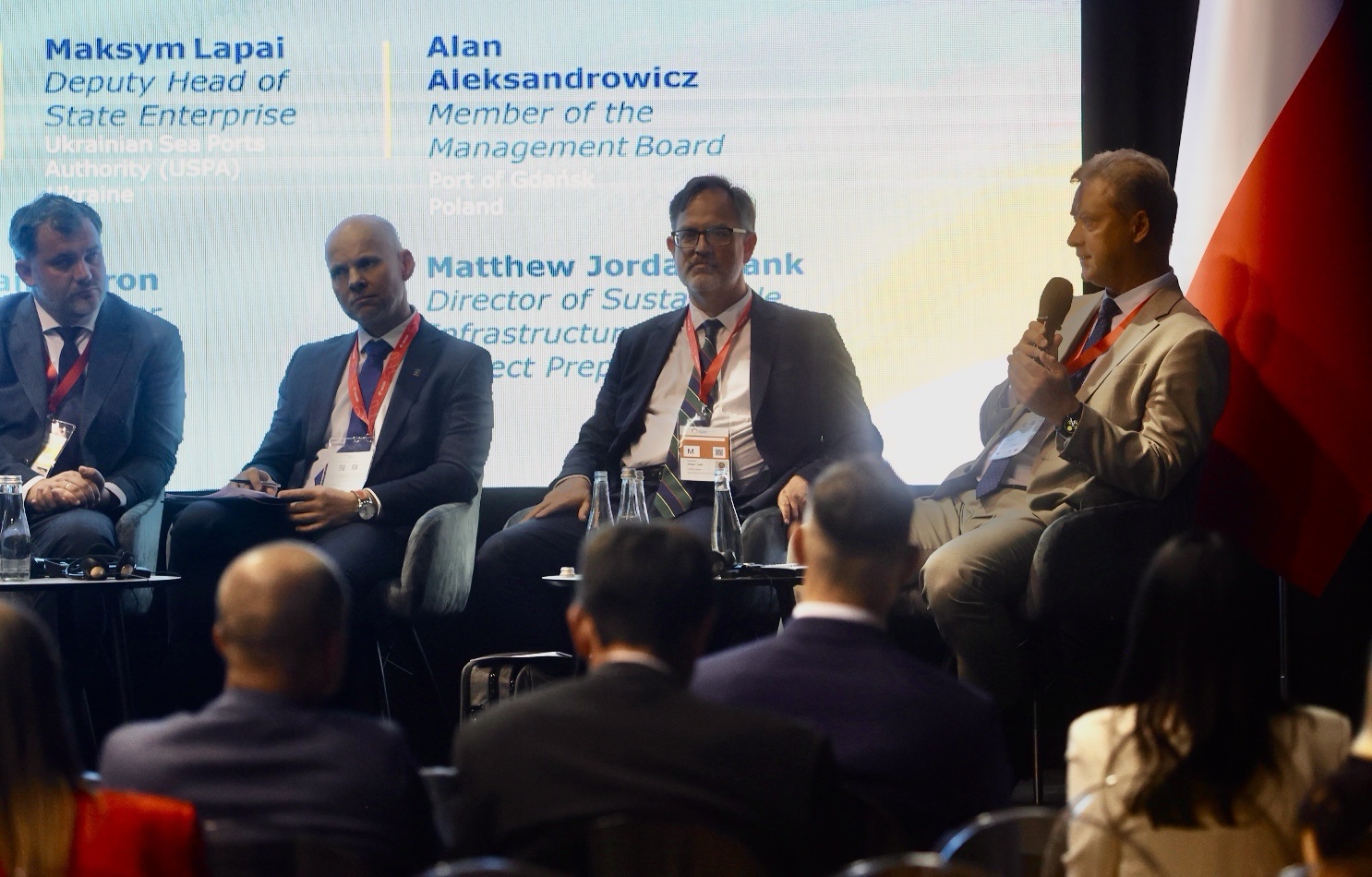
One of the conference’s topics was a panel discussion on maritime transport and inland waterway transport, in which Alan Aleksandrowicz, Vice-President of the Port of Gdańsk Authority (ZMPG), took part. Experts unanimously agreed that the transport sector would become one of the main forces driving Ukraine’s reconstruction. The war has significantly altered the region’s logistics landscape, increasing the importance of alternative transport routes, such as the ports on the Danube.
Andrii Kashuba, Ukraine’s Deputy Minister for Community and Territorial Development, emphasised that the future of Ukrainian transport rests on infrastructure modernisation, fleet reconstruction, the development of inland waterway transport and integration with the European TEN-T network. He also highlighted the importance of industrial parks and logistics centres linked to ports.
‘Our vision is not simply to rebuild what existed before the war, but to create a modern, resilient, safe and competitive transport system that is fully integrated with the European transport area’, he said.
Despite persistent threats, Ukrainian ports remain operational and play a vital role in the global supply chain. Since the launch of the maritime corridor in August 2023, the port of Odessa has handled over 200 million tonnes of cargo. At the same time, port infrastructure remains a target for attacks, which necessitates the use of advanced security and operational resilience systems.
It was emphasised that the hostilities have not only failed to halt port operations but have also highlighted their strategic importance for global food security.
‘Russia does not target military installations, but the global food supply chain’, said Maksym Lapai, Vice-President of the Management Board of Ukrainian Sea Ports. ‘Yet Ukrainian ports are still active, functioning and fighting for peace, and the heart of Ukraine beats in unison with them’.
The role of Polish ports in Ukraine’s reconstruction
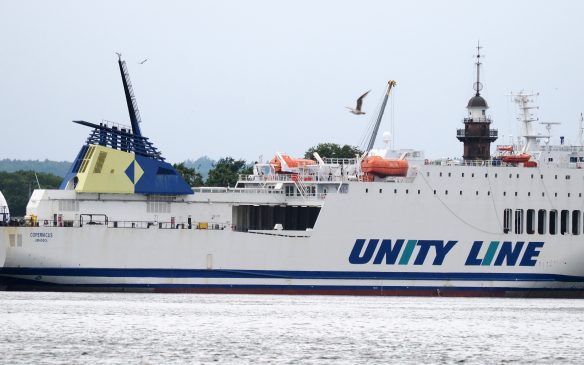
A special place in the discussion was given to Polish-Ukrainian partnership. Polish ports, such as the largest one, the Port of Gdańsk, currently serve as a key logistics hub for Ukrainian foreign trade. The dynamic growth in trade between the two countries is reflected in rising container traffic.
The Port of Gdańsk currently handles around 300,000 TEU annually in trade with Ukraine, while the largest container terminal on the Baltic Sea – the Baltic Hub Container Terminal – accounts for around 40% of the Ukrainian container market. Poland has also become Ukraine’s largest trading partner within the European Union.
‘This means that we are a safe, predictable and well-organised gateway – crucial for Ukraine. This is possible thanks to, for example, intermodality’, argued Alan Aleksandrowicz, Vice-President of the Port of Gdańsk Authority.
He pointed out that as recently as 12 years ago, exports to the European Union accounted for around 20–24% of Ukraine’s total exports, compared to 55–60% today, which is worth $19 billion. Approximately $4 billion of this amount is generated by trade with Poland, meaning that we have become Ukraine’s largest trading partner within the EU. This is followed by Italy, Germany and the Netherlands. Meanwhile, the value of exports from Poland to Ukraine amounts to approximately $13.6 billion.
According to the Vice-President of the Port of Gdańsk, the most important challenge in the coming years will be to improve the capacity of land transport links. ‘If we want to build a shared future, we must reduce transit times and increase capacity at the borders by unifying customs regulations and investing in rail infrastructure, particularly in intermodal terminals on both sides’.
Alan Aleksandrowicz also emphasised the need for a partnership-based approach to infrastructure development. ‘We should not treat Polish and Ukrainian ports as competitors. We are a single, complementary system serving a single market of at least 100 million customers. We can work together’.
The URC 2026 conference in Gdańsk confirmed that Ukraine’s reconstruction will be a multifaceted process, requiring international involvement and a strategic approach to infrastructure development. Ports and logistics are essential to this process – not only as means of transport, but as pillars of economic integration, security and stability in the region.