New ferry service from the Port of Gdańsk to the Port of Karlshamn in Sweden
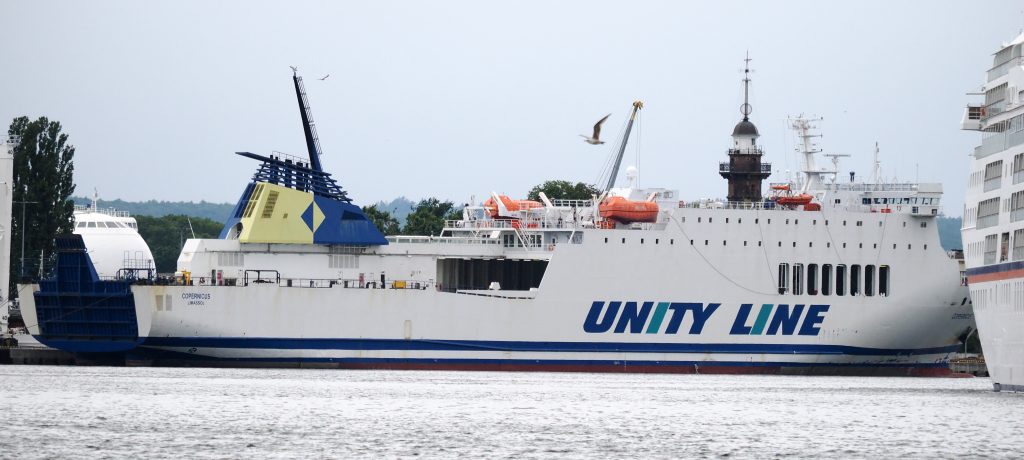
POLSCA Baltic Ferries has officially launched a regular service from the Port of Gdańsk to the Port of Karlshamn. This signals a big push into the Baltic ferry market. POLSCA now connects Poland with four Swedish ports: Nynäshamn, Ystad, Trelleborg and Karlshamn.
The agreement to launch a new ferry service connecting the Port of Gdańsk and the Port of Karlshamn was signed earlier this year, in early February. The parties to the agreement were the Port of Karlshamn and Polska Żegluga Bałtycka (PŻB), the owner of Polferries.
The service connecting the Port of Gdańsk – Poland’s largest port and the sixth largest in the EU – and the Port of Karlshamn is a response to the growing demand for transport between Central Europe, Sweden, Denmark and southern Norway.
‘In recent years Polish shipowners have been competing amongst themselves, while foreign competitors have been strengthening their position. Fortunately, those days are over and this marks the end of unnecessary Polish-Polish rivalry in the Baltic Sea. We are entering a new phase, with a competitive, modern and ambitious offer that is set to strengthen Poland’s position in the Baltic Sea. A new route means new opportunities, greater flexibility and better conditions for businesses, carriers and exporters’, said Arkadiusz Marchewka, Deputy Minister for Infrastructure, during the official launch of the new service. ‘The new route begins here, in Gdańsk – at a port that has been a symbol of the success of the Polish maritime economy in recent years. A port that is our gateway to the world and offers great opportunities as a pillar of development for the entire Polish economy.’
The President of the Port of Gdańsk also commented on the significance of the new route:
‘Every new route brings fresh opportunities for the economy, trade, logistics and tourism, and provides yet another boost to the development of the entire region and Poland. Karlshamn is a strategically located port, offering quick access to southern Sweden and convenient connections to Denmark and Norway. The launch of the Gdańsk–Karlshamn route strengthens the Port of Gdańsk’s position as a key transport and economic hub in the Baltic Sea and confirms the growing role of our port as a gateway connecting Central and Eastern Europe with the Nordic markets’, said Dorota Pyć, President of the Port of Gdańsk Authority.
Copernicus and Skania
In the Port of Gdańsk, the ferries are handled at the Westerplatte Ferry Terminal, which is equipped for modern ro-ro and ro-pax operations, as well as efficient handling of HGV traffic.
The new service is operated by two ferries: Copernicus and Skania, both owned by the shipping company, Unity Line. They have a similar load line, measuring approximately 2 km. Each vessel is able to carry around 90 commercial vehicles, each measuring approximately 17 metres. One of the ferries will be used primarily for freight transport, while the other as a ro-pax vessel also offers comfortable travel conditions for passengers, including catering facilities and cabins.
The shipping company plans a maximum of six sailings per week, with each trip taking about 13 hours. According to the schedule, the vessels depart in the evening from both Gdańsk and Karlshamn, and then arrive at their destinations ports in the morning.
POLSCA – a joint brand
Both ferries have so far operated between Świnoujście, Trelleborg and Ystad. Now, as part of the new service, they are to depart from Gdańsk as POLSCA Baltic Ferries. The company was established in 2026 as a joint brand of three Polish shipping companies – Polska Żegluga Bałtycka (Polferries), Unity Line and EuroAfrica – to combine their fleets, offers and sales systems, and to compete more effectively with foreign carriers in the Baltic Sea.
‘The launch of the Gdańsk–Karlshamn service marks another important stage in the development of POLSCA Baltic Ferries. Our goal is not only to open a new route, but to build an integrated ferry network that provides passengers and freight customers with greater flexibility in terms of travel and transport between Poland and Scandinavia. Karlshamn perfectly complements our existing Swedish ports and strengthens the POLSCA Baltic Ferries’ long-term development strategy in the Baltic Sea’, says Piotr Redmerski, a member of the management board of POLSCA Baltic Ferries.
Copernicus gets things off to a good start
Copernicus made the first voyage on the new route. It set sail on Monday, 6 July at 21.00 hours, arriving at its destination on Tuesday around midday. The vessel, which is 150.4 m long and 23.4 m wide, can accommodate up to 160 passengers, and offers comfortable travel conditions both during the day and the night. The ferry has 51 cabins offering a total of 128 berths.
The second ferry to operate on this route – Skania – is a comfortable ro-pax passenger and car ferry. The vessel is 173.7 m long and 24 m wide, and can carry up to 900 passengers. The ferry has 196 cabins providing a total of 600 berths. Each cabin is equipped with an en-suite bathroom, air conditioning and facilities designed to make your journey as comfortable as possible. There is a large dining and entertainment area on board for passengers to enjoy. They have access to restaurants, bars, a shop, a nightclub and communal areas to make the journey across the Baltic Sea pass quickly and comfortably.
A real treat for tourists
Karlshamn is situated on the south-east coast of Sweden. It offers direct access to the E22 transport corridor and convenient road access to Malmö, Copenhagen, Gothenburg and Oslo. For logistics operators, the new route offers additional options for transport flow planning, including the possibility to enter Sweden via one port and return via another – depending on delivery locations and operational requirements.
Although the new route has been designed primarily for freight transport, mainly the movement of articulated lorries, other people are going to find it an attractive alternative when travelling to Sweden. Karlshamn is a convenient gateway for visitors from Poland to the Blekinge region, known for its archipelago, cycle routes, coastal landscapes and nature reserves. For visitors from Sweden, the service provides convenient access to Gdańsk and the Tri-City, as well as the entirety of Pomorskie – one of Poland’s most popular and most beautiful tourist regions, with a rich history and unique cultural heritage.
‘Today we are beginning our operations as POLSCA. We are opening a new route between Poland and Scandinavia – between Gdańsk and Karlshamn – a kind of “floating bridge”. As POLSCA, we build a strong Poland’, says Paweł Pluto-Prądzyński, a representative of the Management Board of POLSCA Baltic Ferries.