
Joint Digitalisation Plan for Polish Ports for 2026–2028
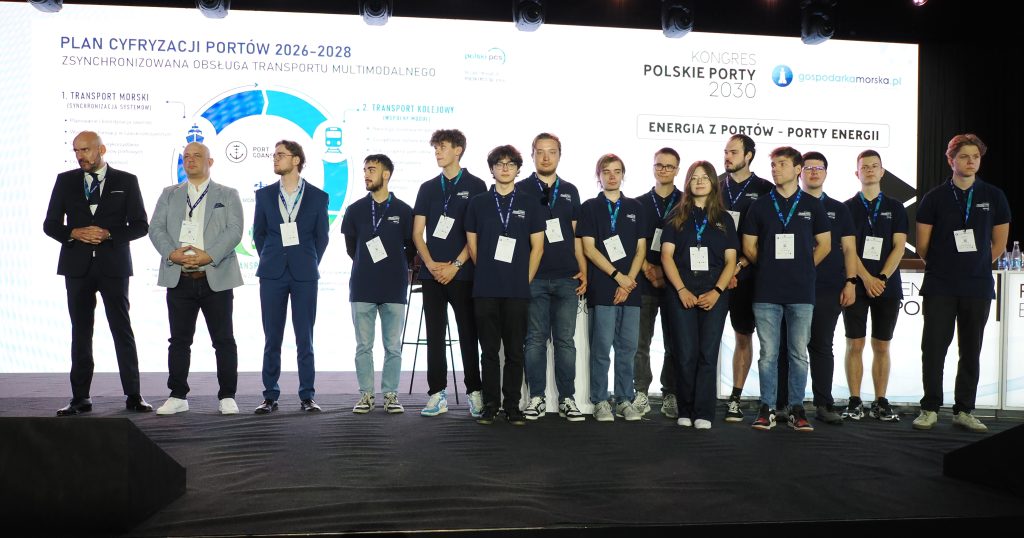
A cooperation agreement signed by the management boards of the ports of Gdańsk, Gdynia, Szczecin and Świnoujście during last year’s Polish Ports 2030 Congress is already delivering tangible results. Poland’s largest ports have agreed on a joint digital infrastructure development plan for 2026–2028, aimed at increasing operational efficiency, improving customer service and strengthening the security of port infrastructure.
The programme was unveiled during the opening of this year’s Polish Ports 2030 Congress.
‘Seaports are a strategic pillar of Poland’s economy and national security. Their digitalisation must therefore go hand in hand with building resilience to emerging threats’, emphasised Arkadiusz Marchewka, secretary of state at the Ministry of Infrastructure. ‘The joint digital infrastructure development plan will enable better coordination of logistics processes, improve data exchange and strengthen the cybersecurity of key port systems’, he added.
This practical cooperation demonstrates how joint action can enhance the competitiveness of Polish ports and reinforce their role in European supply chains. The plan will be implemented in cooperation with Polish PCS, which is developing a digital data exchange platform connecting participants in the port logistics chain, including terminal operators, shipping lines, shipping agents, freight forwarders, carriers, and public authorities.
More efficient logistics and better use of infrastructure
A key element of the plan is the development of solutions supporting the management of vessel traffic, as well as rail and road transport. The joint initiative will include the synchronisation of port operating systems and the development of dedicated modules for rail and road transport operations.
The objective is to maximise the use of existing infrastructure through more effective management of cargo flows and transport movements. This will help eliminate unnecessary delays, queues and disruptions to logistics operations.
The benefits will be felt not only by ports and logistics operators, but also by residents of port cities. More efficient management of heavy goods vehicle traffic will help reduce congestion in port areas and lower emissions generated by vehicles waiting in queues.
Unified solutions for business
The development of digital infrastructure will also simplify procedures for businesses using Polish ports. They will benefit from more consistent access to digital services, resulting in smoother cooperation with ports, fewer processes carried out without digital tools, and lower operating costs.
‘The Port Digitalisation Plan envisages the creation of a common, unified interface for cooperation between ports and their partners, including rail and road carriers, freight forwarders and logistics operators’, emphasises Jarosław Bochiński, Chairman of the Programme Council of Polish PCS and Adviser for Digital Transformation to the Management Board of the Port of Gdynia. ‘This will simplify data exchange, reduce the need for manual communication and ensure consistent rules for cooperation with Polish ports’, he adds.
Joint action instead of duplicating expenditure
The ports emphasise that the joint development of digital solutions will enable them to make more effective use of financial resources and the expertise of the individual organisations.
‘Instead of developing similar systems independently, we are moving towards a model in which we create shared solutions and adapt them locally only where the specific characteristics of a particular port require it’, says Remigiusz Myszk, Director of the Digitalisation Department at the Port of Gdańsk Authority and Member of the Programme Council of Polish PCS. ‘Through the gradual harmonisation of procedures, standardisation of practices and the adoption of a shared solutions architecture, Polish ports will achieve consistent integration with national and European systems, while end users and business partners will benefit from a uniform and reliable standard of service, regardless of which Polish port they use’. ‘This is not only the foundation for the next generation of Smart Port 4.0 solutions, but also a competitive advantage for Polish ports within international supply chains’, he adds.
Cybersecurity as a shared priority
The second pillar of the programme is the development of cooperation in the field of cybersecurity. ‘As part of the joint programme, the ports are also developing a consistent approach to protecting digital environments and ensuring the continuity of the systems that support port operations’, emphasises Tomasz Laskowski, Director of Technology at the Szczecin and Świnoujście Seaports Authority (ZMPSiŚ).
The measures will be implemented in line with new regulatory requirements, including legislation implementing the NIS2 Directive. ‘These solutions address the specific needs of individual ports while strengthening their digital resilience in response to increasing regulatory and operational requirements’, adds Tomasz Laskowski.
Joint initiatives by Polish ports for future development
‘These solutions address the specific needs of individual ports while strengthening their digital resilience amid increasingly demanding regulatory and operational requirements’, adds Tomasz Laskowski. At the same time, work is underway to define common directions for the development of Polish ports over the coming years and even decades.
Alongside digital transformation, the joint initiatives also cover security issues and the adaptation of regulations and procedures to rapidly evolving national and European requirements. The objective is to build a complementary port system in which Polish ports complement one another and jointly strengthen their competitiveness within the European market.
The scale of the investment will be determined once the analytical work has been completed. Funding will depend on the nature of the individual projects and may include both the participating organisations’ own resources and potential external funding sources. Implementation of the plan will include the integration of IT systems and the further development of digital infrastructure at each of the participating ports.
The ports also supported the organisation of the Congress, including one of its accompanying events: a 24-hour student hackathon for programmers from across Poland, who will, among other tasks, work on a challenge prepared by the IT teams from Gdańsk, Gdynia, Szczecin and Świnoujście. The aim of the hackathon is to develop an application or AI-based solution supporting the business processes of the partners of the Polish Ports 2030 Congress.