Port of Gdańsk at the European Economic Congress: well-planned investments, tangible development
Well-planned infrastructure projects help build the resilience of the Polish economy and have a positive impact on the Port of Gdańsk’s position in the rankings of seaports across the European Union and Europe as a whole. During this year’s European Economic Congress in Katowice, the Port of Gdańsk, as a key transport hub for Poland and the Baltic Sea Region, demonstrated the significant extent to which strategic port and maritime investments contribute to security and competitiveness. and thus bring tangible benefits to the national economy.
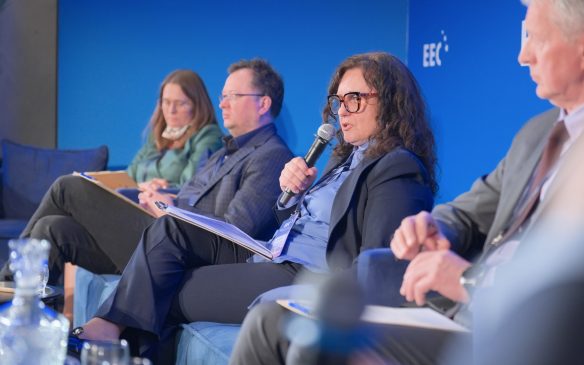
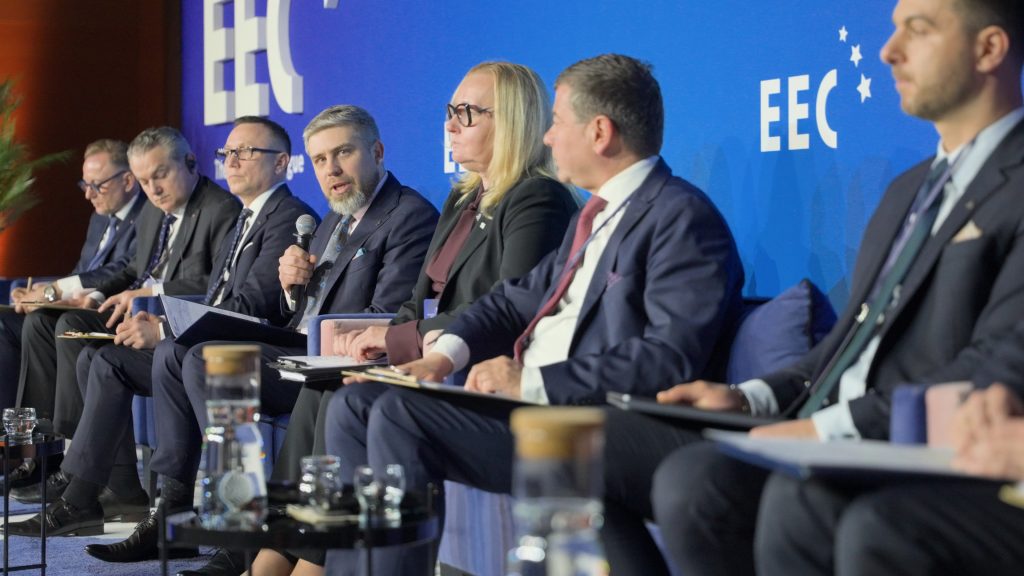
Funding, legislation and operational efficiency – these are the key conditions for the success of major infrastructure projects, as highlighted by the Minister of Infrastructure, Dariusz Klimczak, during the opening of the ‘Major Infrastructure Programmes’ panel at the 2026 European Economic Congress in Katowice. The minister emphasised that the scale of the challenges remains significant, and that what is crucial is not only ‘what’ should be built, but ‘how’ it should be. The announcement of plans to speed up the investment processes and prepare legislative changes set the tone for the ensuing discussion.
‘I am very keen to ensure that projects proceed smoothly. I am not just talking about selecting a contractor, but about the time it takes to sign the agreement. I know it takes too long and I know what losses we incur during this period. First and foremost, we want to speed up the investment process and submit a bill to the Sejm before the end of this year’, the minister announced.
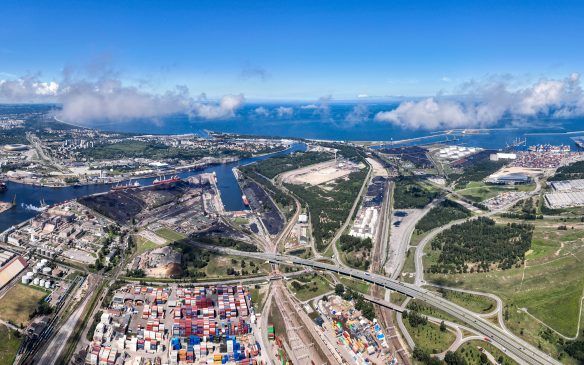
The Port of Gdańsk could not be left out of the discussion on the largest projects currently at various stages of implementation, as well as the challenges faced by both investors and contractors. It has been successfully implementing projects that are crucial for the development of Poland’s maritime economy for years, strengthening the resilience of our country’s entire socio-economic system, including security in the broadest sense. Among the most important projects presented by Stefan Rudnik, Director of the Investment Department at the Port of Gdańsk Authority S.A., were projects currently under way which, on the one hand, create development potential for the port and, on the other, strengthen the energy security of Poland and the region. We are talking about the expansion of the Naftoport liquid fuel terminal with a new cargo handling station, which is going to increase both the capacity and resilience of the infrastructure, making it possible to maintain continuity of supplies during maintenance work or breakdowns. The construction of the floating FSRU terminal, which is to be permanently located in the Gulf of Gdańsk, is also significant. Both projects are due to be completed in 2028, while the T5 installation terminal at the Baltic Hub Container Terminal is currently in its final stages. This infrastructure is essential for the development of offshore wind energy in the Baltic Sea, which is one of the cornerstones of the country’s energy transition.
However, the project that is crucial for the further sustainable development of the Port of Gdańsk is the construction of a second, alternative rail link to the port island, known under the working title ‘Kolej na porty’. Today the cargo handling terminals in the Northern Port account for around 80% of cargo handling at the Port of Gdańsk. The new line, planned to be completed within a decade, is intended to ensure the port’s continued development, going hand in hand with an increase in cargo handling capacity. A partnership agreement concerning the development of preliminary documentation for the expansion of the rail and road access infrastructure to the existing and planned deep-water terminals in the Northern Port of Gdańsk was signed by Port of Gdańsk Authority SA and PKP PLK in November 2025.
Smaller projects, such as those in the Inner Port, are also necessary, involving the upgrades and refurbishment, adapting the quays to current technical requirements and modern superstructure, all of which allows for increased efficiency among operators working in this part of the Port of Gdańsk.
What is important is that the projects implemented at the Port of Gdańsk and in the surrounding area bring tangible benefits to the economy and society. This is confirmed by a report recently published by PwC Poland, commissioned by the Port of Gdańsk Authority.
‘The impact of port and access infrastructure development is clearly visible’, said Stefan Rudnik during the panel discussion. ‘The PwC Poland report indicates that, just in 2024, state budget revenues from VAT, customs duties and excise duties related to the cargo handling activities of the Port of Gdańsk amounted to PLN 44.6 billion, with a gross value amounting to PLN 20.5 billion’. The port also generates around 80,000 jobs in its socio-economic environment.’
These figures could be immediately compared with those for another transport sector. Marcin Danił, a member of the Management Board responsible for finance and trade at Polskie Porty Lotnicze, revealed during the panel discussion that airports had generated around 550,000 jobs and 60 billion in additional revenue for the budget. This is the result of the work of 15 airports in Poland.
The moderator, Adrian Ołdak, asked how projects are selected for implementation. Stefan Rudnik explained that it is crucial to rely on a long-term development strategy, but also to conduct ongoing analysis of market conditions and to respond to its needs.
‘We do not want to be merely a logistics hub. We are also building the national security and energy security for Poland and the region. We also view the market from the perspective of shipowners, monitor trends in vessel orders, and build our infrastructure with this in mind’.
A key element in the planning and implementation of major infrastructure investments is a long-term strategy, spanning several decades, which the port can use as a basis for its investment programmes. This must be aligned with the overall national programme, and not be subordinated solely to the interests of a specific entity. The best example of such an investment is port access infrastructure, namely the aforementioned new railway link at the Port of Gdańsk, scheduled for completion within the next decade.
The representative of the Port of Gdańsk Authority also highlighted the importance of having the right staff and the experience they gain. He also emphasised the significance of an efficient and experienced team within the organisation, such as that available at the Port of Gdańsk.
‘We learn from previous projects and build up the team’s experience within the company. We can see that some projects involving our in-house contract engineer proceed increasingly smoothly’, said Stefan Rudnik.
The debate at the European Economic Congress clearly demonstrated that the Port of Gdańsk’s sound and well-thought-out projects are not just about concrete and steel, but represent a long-term, powerful developmental impact of fundamental importance for the security and resilience of the economy, contributing to Poland’s strong position on the map of Europe and the whole world.