Port of Gdańsk: A new railway siding and storage yards to boost the operational capacity of the Baltic Hub terminal
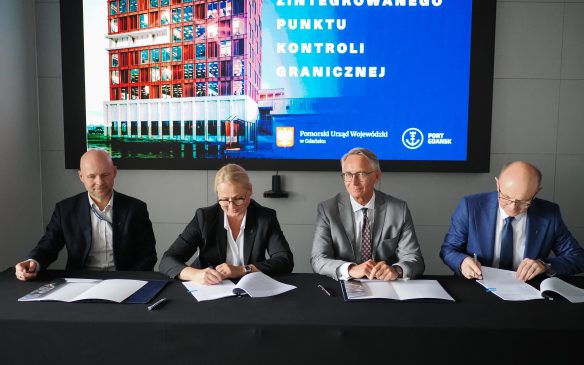
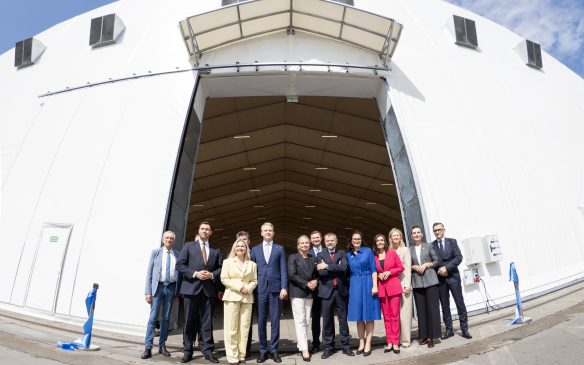
An area of over 26 hectares, known as ‘Deepwater’, situated in the deep-water section of the Port of Gdańsk, has gained a new tenant. The agreement, signed by the Port of Gdańsk Authority and Baltic Hub Container Terminal, marks the beginning of the next stage in the development of the largest container terminal in Poland and the Baltic Sea region.
Deepwater is an area with exceptional potential, and its development is expected to directly enhance the competitiveness of the Port of Gdańsk and the security of supply chains in Poland and across the entire Central and Eastern European region.
In the tender procedure for the lease of the property, one bid was received, submitted by Baltic Hub. On 30 December 2025, the Port of Gdańsk Authority (ZMPG) and Baltic Hub entered into a preliminary agreement. It was necessary to obtain all the required administrative and corporate approvals before the procedure could be finalised. These approvals have now been secured, making it possible to sign the final agreement for a period of 30 years.
Deepwater – one of the key areas of development for the Port of Gdańsk
The area is ultimately to be transformed into a modern intermodal hub for cargo handling, which shall significantly increase the terminal’s operational capacity, both on land and at sea. The completion of this project shall further strengthen Poland’s position as one of the most important logistics centres in Central and Eastern Europe.
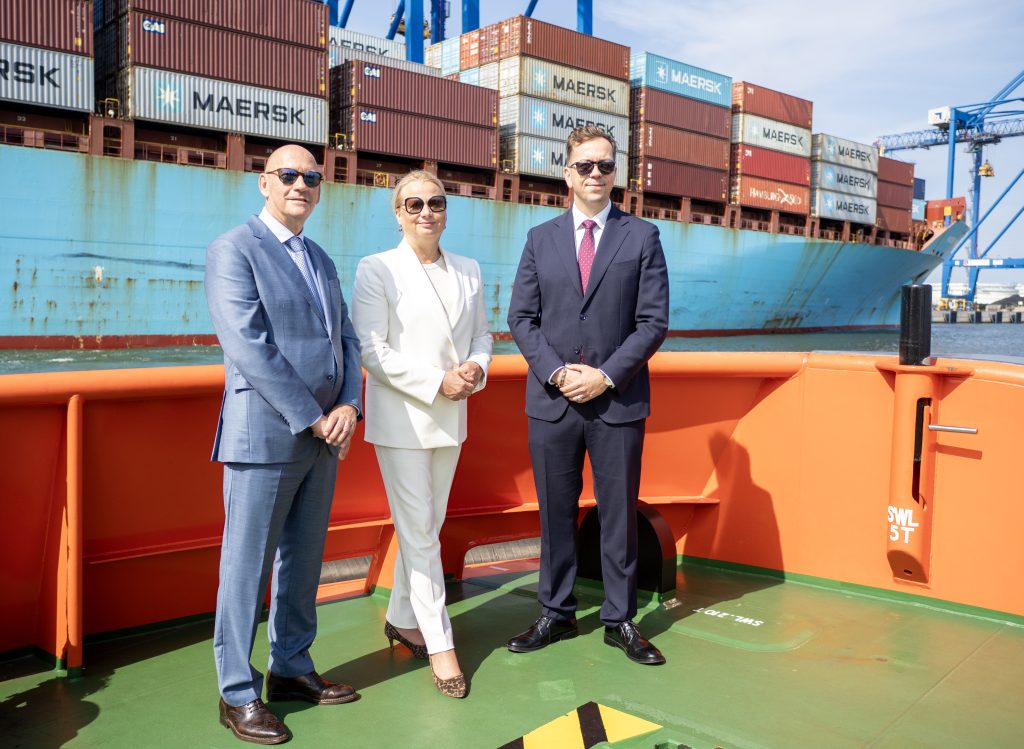
‘The signing of the lease agreement with Baltic Hub Container Terminal confirms the consistent implementation of the Port of Gdańsk’s development strategy. Thanks to direct services to and from Asia, the port can further strengthen its position amongst Europe’s leading ports’, said Dorota Pyć, President of the Port of Gdańsk Authority. ‘Our goal is not only to strengthen the port’s competitiveness and position, but also to enhance the stability of goods flows in the face of the growing importance of global maritime transport and geopolitical challenges. This project is also in line with the principles of sustainable development, creating the conditions for shifting a greater proportion of freight from road to rail. This solution supports more efficient and environmentally friendly supply chains and strengthens the Port of Gdańsk’s position as it competes with other European ports to serve the markets of Central and Eastern Europe, including the Czech Republic, Slovakia and Ukraine’.
Development plans
The growing importance of low-carbon transport solutions means that rail has become a strategic alternative to road transport, increasingly favoured by shipping lines and logistics operators. That is why Baltic Hub plans, for example, to further expand the rail infrastructure in this area, which includes the construction of a second railway siding comprising seven tracks that are capable of handling 750-metre-long trains. The project shall also include the construction of new container storage yards. All the work is to be carried out in stages.
‘This agreement marks a milestone in the implementation of Baltic Hub’s long-term strategy’, said Jan Van Mossevelde, managing director of Baltic Hub. ‘The expansion of our rail terminal and the increase in the capacity of our storage yards, in line with the PSA Group’s “Node to Network” strategy, shall strengthen connections with the hinterland, and allow for the transport of a greater number of containers by rail. This is expected to improve the efficiency of connections, reduce the reliance on road transport and support the change in modal structure necessary to reduce emissions in the supply chains. The project also strengthens our ability to deliver the reliability, adequate capacity and sustainable operational efficiency expected by our partners in the shipping sector and by cargo owners’.
The project is part of global changes in maritime shipping – carriers use increasingly larger vessels and optimise their route networks, treating the Baltic Hub as a key gateway for Poland and the Central and Eastern European region.
Access from the water and the sea
The property is covered by a current construction permit: ‘Construction of a Cargo Handling and Storage Terminal at the Northern Port of Gdańsk, together with technical infrastructure and the demolition of existing facilities’. This includes, railway tracks, roads, car parks, hydrotechnical infrastructure for mooring vessels, and the facilities necessary for storage and cargo handling. According to the local spatial development plan, the area is intended for production and service purposes.
The area is also characterised by excellent transport connections. In recent years, a number of projects have been completed to achieve improved rail and road access to deep-water cargo handling terminals. The Port of Gdańsk Authority has also upgraded the road and rail network in the Northern Port. As part of this project, a total of 7.2 km of roads and 10 km of railway tracks have either been rebuilt or constructed, including the access track to said property. The project to improve rail access to the port was carried out by PLK S.A. and involved the upgrade of over 70 km of tracks and 13 level crossings.
The Maritime Office in Gdynia has improved access to this part of the port from the sea by upgrading the approach fairway, making it wider and dredging it to a depth of 18 metres. A turning basin enables vessels to enter the port safely, and allows for two-way traffic, even for larger vessels that were previously unable to enter and leave this part of the port simultaneously. Another significant milestone in the port’s development was the completion of the outer breakwaters, which form the foundation for the operation of the terminals in the deep-water section of the Port of Gdańsk.