Accessibility as the key to further development – the investments and challenges facing Polish seaports
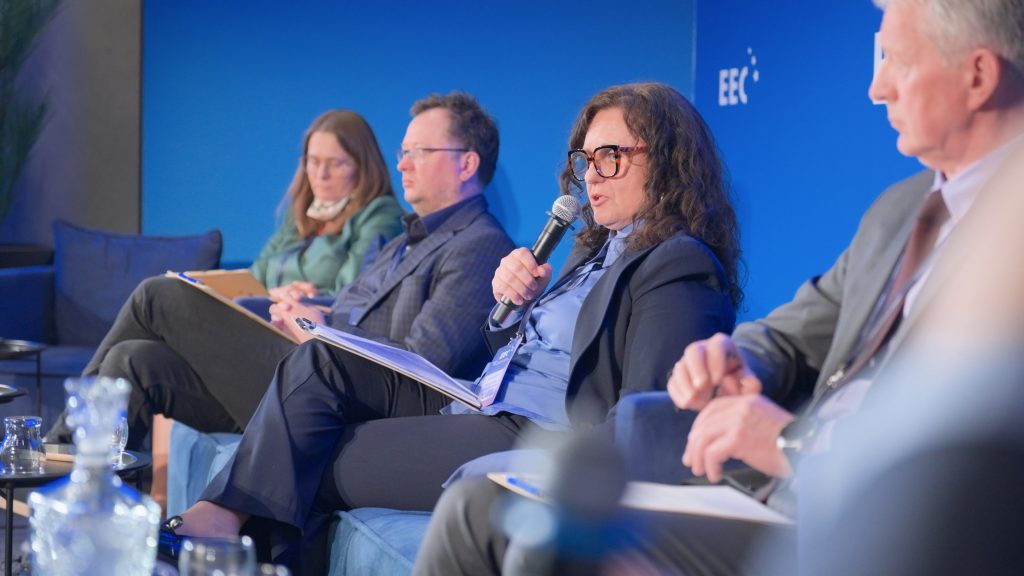
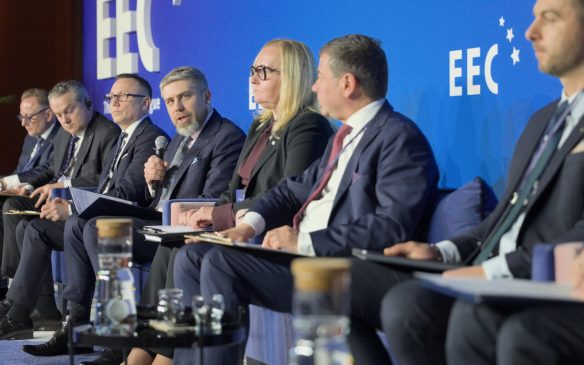
The Port of Gdańsk’s activities now extend far beyond mere cargo handling. Various projects – both those currently underway and those being planned – are transforming its scale, accessibility and significance within the European logistics chains, and some of them are set to have a lasting impact on the development of the city and the region. These are the main takeaways from the discussion on the most important projects and challenges facing Polish seaports during the European Economic Congress.
The dynamic growth of Poland’s seaports today requires much more than just the expansion of quays and terminals. Their accessibility has become a major issue – efficient road and rail links, effective border procedures and infrastructure that must keep pace with growing cargo handling volumes. This is directly linked to the record results of Polish ports, including the largest of them all, the Port of Gdańsk.
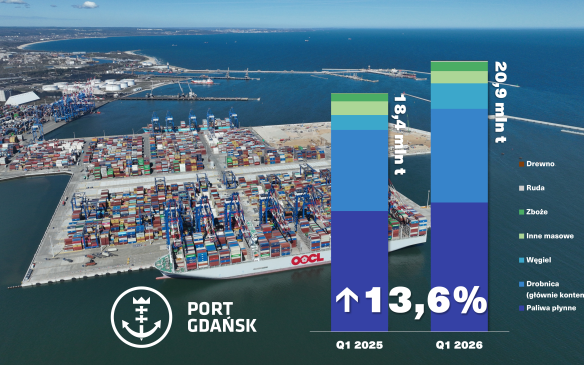
‘We closed last year with 80.4 million tonnes of cargo handled – a 4% increase compared to the previous year. It could have been even better had it not been for the harsh winter, which slowed down operations at the end of the year’, said Katarzyna Szczycińska, acting director of the Strategy and Development Department at the Port of Gdańsk Authority. She added that the Baltic Hub container terminal also achieved spectacular results, handling 2.7 million TEUs in 2025, a year-on-year increase of 23%.
‘It is difficult to find a container terminal in Europe that has been growing at such a pace in recent years’.
Record volumes drive new projects
The upward trend continues this year as well. Data for the first quarter of 2026 show a 22% increase in cargo handling at the Baltic Hub compared to the same period last year. Such results clearly indicate the need for further, proactive infrastructure investments.
One of the key projects is the planning for the expansion of the Baltic Hub terminal, which includes not only the extension of the storage yards and quays but also a significant strengthening of the rail infrastructure. The plans for the terminal is to build a second, seven-track railway siding, with 750-metre-long tracks.
‘If these plans come to fruition, then the terminal will ultimately be able to handle almost 7 million TEUs. Investment in the rail and road infrastructure is a prerequisite to ensure that such a volume of containers can be efficiently transported to and from the port’, said Katarzyna Szczycińska.
During the discussion on the most important infrastructure projects in the ports, it was made clear that the new rail link being developed in partnership with PLK S.A. is of crucial importance to the Port of Gdańsk. The outer port, which deals with around 80% of cargo handling, is currently connected to the mainland by just one road bridge and one railway bridge.
‘We must also build a second road-rail link. We are now entering the conceptual design phase and hope that within three years we can reach a consensus, enabling us to begin the design work’.
Partnership rather than competition
The debate also touched upon the planning for deep-water container terminals at the ports in Gdynia and Świnoujście. The question of potential competition for Gdańsk elicited a unanimous response from the participants.
‘Competition is a natural and healthy element of the market’. Rafał Zahorski, a member of the Management Board of the Szczecin and Świnoujście Seaports, added that market analyses show no overlap in the cargo handling facilities of these ports. ‘The three largest Polish ports do not view each other as competitors’.
This approach is reflected in the already formalised partnership.
‘We realised long ago that, when we work together, we are stronger. Last year, at the Polish Ports Congress in Sopot, we signed a partnership agreement. Now operating under the Polish Ports brand, we are working together to call for the development of access infrastructure and the streamlining of cargo handling processes at the port. We also plan to conduct market analysis together so that we can build a strategy based on real-world data’, said Katarzyna Szczycińska.
Efficient procedures and administrative preparedness
At the same time, the Port of Gdańsk continues to invest in streamlining the administrative processes. The planned construction of an Integrated Border Control Point is expected to cover over 90% of the cargo handled by the Baltic Hub Container Terminal. Measures to strengthen phytosanitary and veterinary services are also significant, particularly in the context of the rapid development of cold storage facilities in ports.
‘Within a few years, the total floor space of the cold stores and their capacity to accommodate pallets are set to triple. This means we need to increase the number of staff carrying out inspections’, said Katarzyna Szczycińska.
Building the Port of Gdańsk’s position in international markets
The ‘hard’ infrastructure projects are complemented by the business and marketing initiatives of the Port of Gdańsk mentioned during the panel discussion. One of these is the Business Mixer series of meetings, which serves as a platform for Polish entrepreneurs to connect with foreign partners. Following the events organised in Asia, this year the Business Mixer is to be held in the United States for the first time.
‘We take Polish companies there and give them a real opportunity to build business relationships. This initiative is very well received by the participants’, said Katarzyna Szczycińska.
***
The debate at the European Economic Congress made one thing clear: the future of Polish ports today depends, first and foremost, on their accessibility. Land infrastructure, efficient procedures and partnerships between ports are becoming key to maintaining the growth rate and further strengthening Poland’s position on Europe’s logistics map.